
Learning from William Wilberforce (May 16, 2026)
Why friendship, connection and grinding the beans are so important.

Good Morning Friends,
I am five hours ahead in time of those who live on the coast of the U.S. We spent last night In Leeds, England, and today will travel to Epworth, to see the rectory where the Wesleys grew up and were taught by Susanna, the Wesley Memorial Methodist Church in that city, and Saint Andrew’s Parish, where John and Charles were confirmed by their father and the rector, Samuel. We will celebrate Holy Communion there, which is meaningful.
I am thinking today of a very fine paper by Glen O’ Brien of Eva Burrows College in Australia, on the Wesley sisters. Glen and I were in more than one Oxford Institute working group together, and if you want to go more deeply into the complexities of a very religious and very human family, Glen takes you there, in a paper entitled “‘You Writ This Sermon for Hetty’: Reclaiming the Wesley Sisters”. Thank you again, my friend.
So, today Epworth, where the people are always extraordinarily hospitable to us.
Yesterday we visited the William Wilberforce museum in the city of Hull, in the Yorkshires. This is a day that is on very few Wesley Pilgrimage itineraries. In collaboration with Bishop Sue Haupert-Johnson, it is our attempt to discover the roots of anti-racism in our own tradition.
John Wesley used the image of the porch, the door and the house to speak of salvation. We have the historical resources to approach anti-racism not as a political ideology but as God’s work of sanctification in us and through us. The porch might be the way that God stirs in our hearts to awaken us to love, and to the conviction that God has created and loves all people, and to see all people as family. The door might be saying yes to the Lordship of Jesus Christ or the movement of the Holy Spirit. I am convinced that Wilberforce saw the abolition of slavery as a part of his conversion.
Can we see the work of overcoming racism as a part of our own conversions?
I am picturing the house, where we do the actual work of reckoning with racism and imagining that there are several doors into the house, the doors of baptism, scripture, tradition, relationships, mission, advocacy, humility and honest confession.
We talked about the Clapham Sect, Wilberforce himself, the Wilberforce-Wesley connection, and the similarities between the associations within the Church of England and the small groups (class and band meetings) within the Wesleyan tradition.
Two learnings for us:
Wilberforce and Wesley both engaged racism from a place of deep faith. Their convictions, which they were able to voice publicly, grew out of a journey to holiness, a knowledge of scripture, and a willingness to use their privilege and position for the good of others.
Wilberforce and Wesley give us a model of doing this work not as heroic solo leaders but as members of a community or network of friends, disciples and allies who stood together over the long haul. For both, public advocacy for victimes of the slave trade was a part of their entire life’s work.
Racism was present in the 18th century, and it is present in the 21st century. We are faithful to our deep Methodist tradition when we can learn the ways in which our ancestors did not engage–here we tell the truth–and the ways they did engage, and here we give thanks to God.
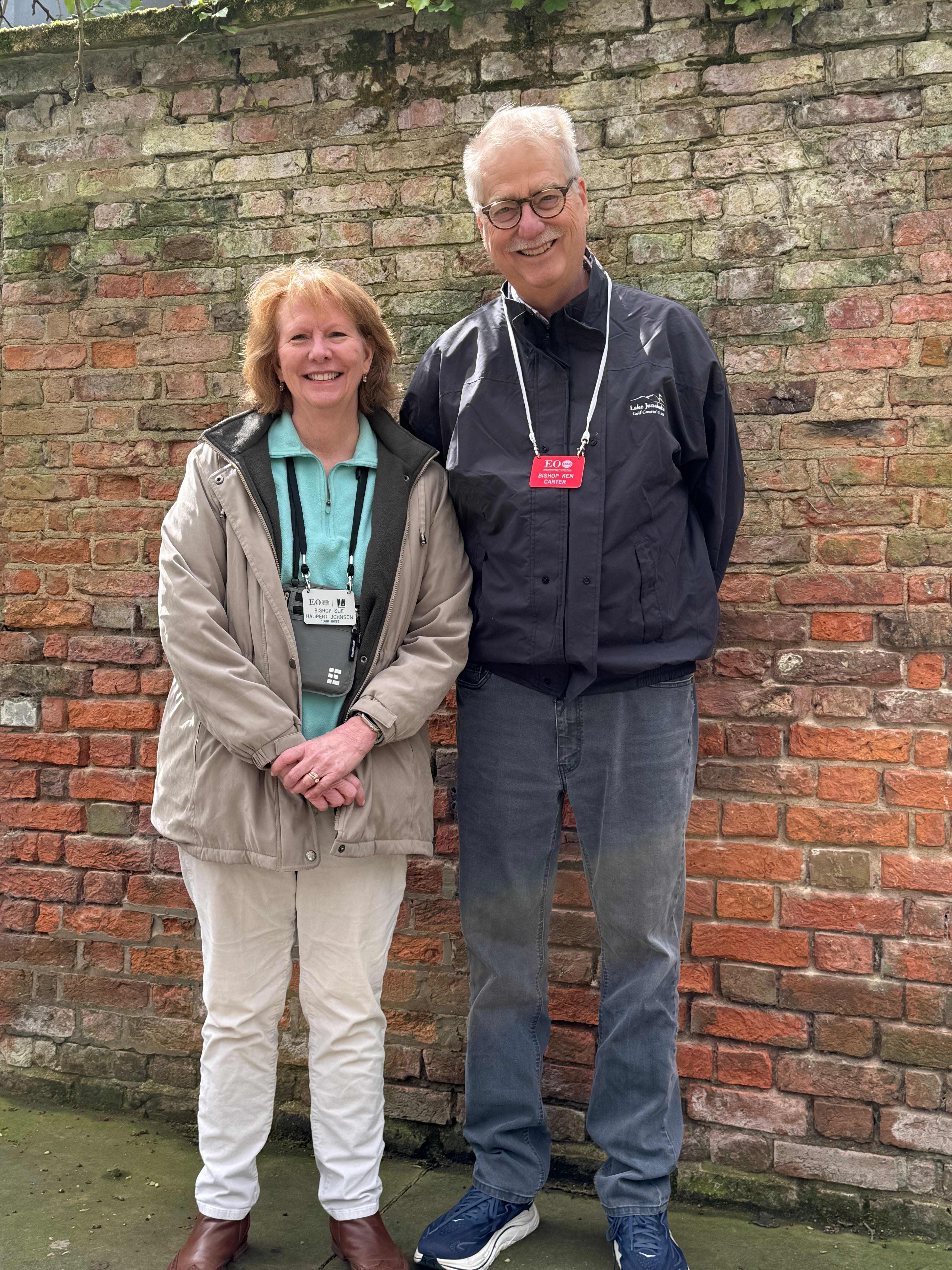
With Bishop Sue Haupert-Johnson, at Hull.
+
I shared the Wilberforce remembrance from the Book of Common Prayer (July 30th):
Let your continual mercy, O Lord, kindle in your Church the never-failing gift of love; that, following the example of your servant William Wilberforce, we may have grace to defend the poor, and maintain the cause of those who have no helper; for the sake of him who gave his life for us, your Son our Savior Jesus Christ, who lives and reigns with you and the Holy Spirit, one God, now and for ever. Amen.
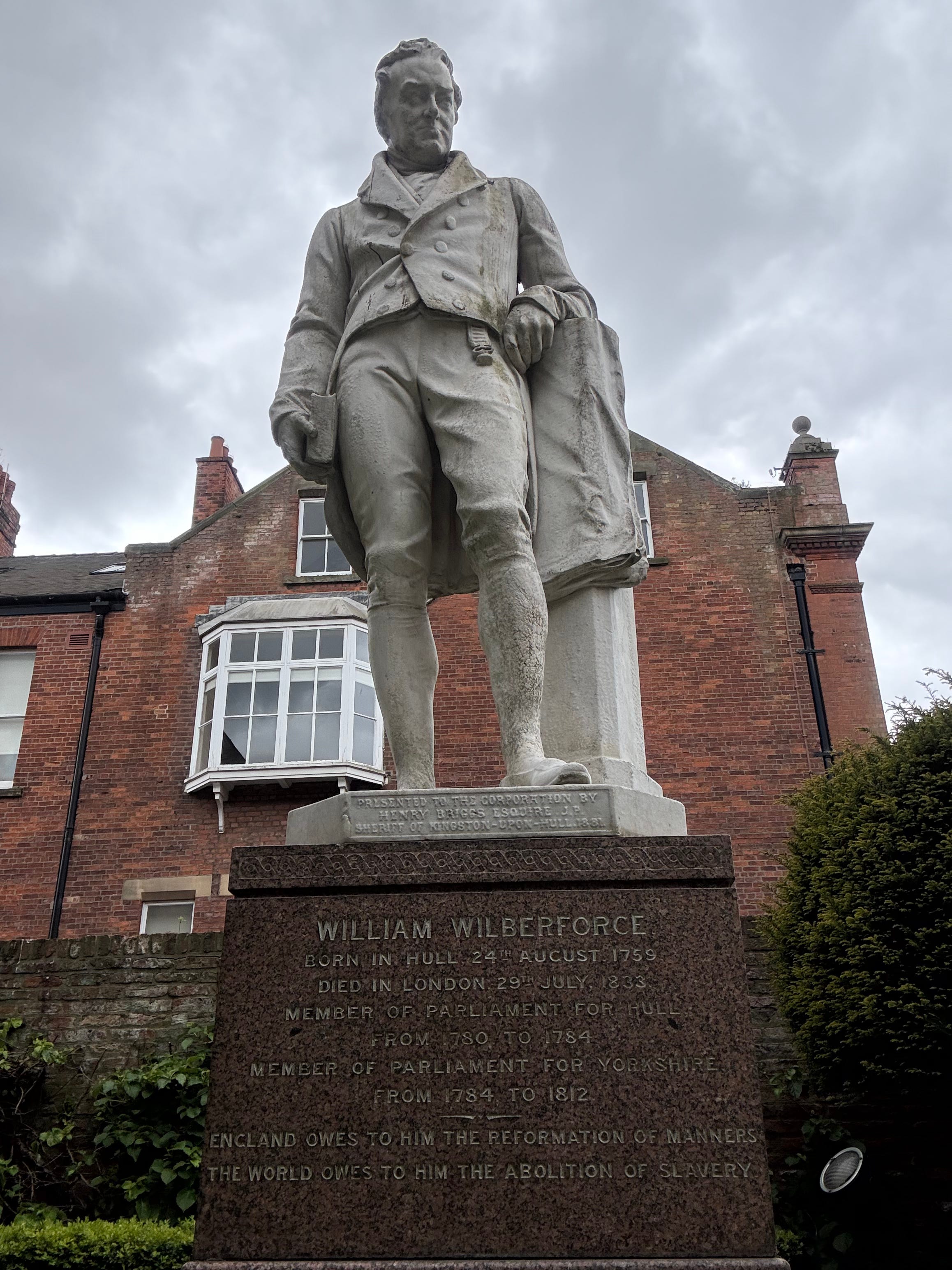
Photo: The great abolitionist William Wilberforce
+
I have been blessed to be on this pilgrimage a number of times. Why do I do it? I want our ordinands to have a common experience of Methodism; they attend a number of seminaries, and this brings a rich diversity to our conference, but shared learning is also very beneficial. I want them to expand their knowledge of the tradition. They will see Oxford, where the Wesleys were ordained and where the movement began; Bristol, an extraordinary context for mission and field preaching, and London, where Wesley had his “Aldersgate” experience, where he continued to lead and see the spread of the movement, and where he was buried.
We sing, pray, have devotions, share meals, remember our baptisms, walk alot, come to know each other on a deeper level, and begin to understand our particular limb upon which to perch in this family tree. And we learn about the deeper Church of England substructure, how church and state relate to each other, and where our doctrines, discipline, spirituality and missional orientation originated. It is a blessing to share this with Pam and also with my colleague and friend Sue, and with Western North Carolina and Virginia laity and clergy.
God willing, I plan to lead this particular pilgrimage to England once more as an active bishop, in May of 2028. I will retire from active ministry later that summer. If you would like to be a part of that journey let’s talk a little later. The tentative dates are May 22-June 1, 2028. I do plan ahead (smile).
+
On the road I depend on others to grind the beans. While the English seem to have a preference for tea, very good coffee can be found. One only has to search and be patient. I hope to enjoy at least one really first-rate Indian meal while here. Anthony Bourdain famously championed England as the setting for perhaps some of the best Indian cuisine in the world. I know a place in London, near the British Methodist hotel.
I am missing the NBA playoffs, which take place in the middle of the night, but I do see that the Spurs overcame the Timberwolves, and move forward. I can’t wait to see the San Antonio Spurs and the Oklahoma City Thunder. I am reading the Guardian each day. It’s one of my favorite newspapers. I listened to the Bill Simmons conversation (podcast) with Daivd Letterman about his retirement. Really fascinating. I just finished a New Yorker article on the divisions among Jews in the United States over Israel’s present government. I cannot recommend this piece highly enough, and it speaks in a parallel way to the challenge of being a spiritual leader in a divided America. I finished the first draft of The Sanctuary for Lent 2027, which is with the editor. My goal is to see this study happen in 100 small groups, churches and districts, with all royalties going to our Western North Carolina Conference Covenant with the church in Ukraine. More on that later as well.
+
Have a blessed day, wherever you are. As always thank you for reading, subscribing (it’s free), sharing and recommending. All of this really helps to make this weekly reflection known to more people and I continue to delight that we are a weekly congregation well above 2000 people! A day with William Wilberforce has reminded me about why friendship and connection are so important. For this I thank you.